
Moving Countries Means More Than Just Packing Bags
From Orlando to Barcelona, guiding you step-by-step through buying real estate in Spain without costly mistakes.
I bring over 30 years of real estate experience in the U.S., combined with firsthand ownership and active involvement in the Spanish property market, so you don’t have to figure it out alone.Buying property in Spain is exciting, but it’s also complex.
Legal systems, financing differences, cultural nuances, and unfamiliar processes can quickly turn a dream into a costly mistake.Moving to Spain is often more complicated than people expect. Choosing the right visa, securing healthcare, and navigating tax requirements can be overwhelming, and mistakes can lead to delays, extra costs, and avoidable stress.

About US
I’ve spent decades helping clients buy, renovate, and sell real estate across Central Florida, navigating markets, negotiating deals, and protecting my clients from costly mistakes.But like many of you, I started asking a bigger question:
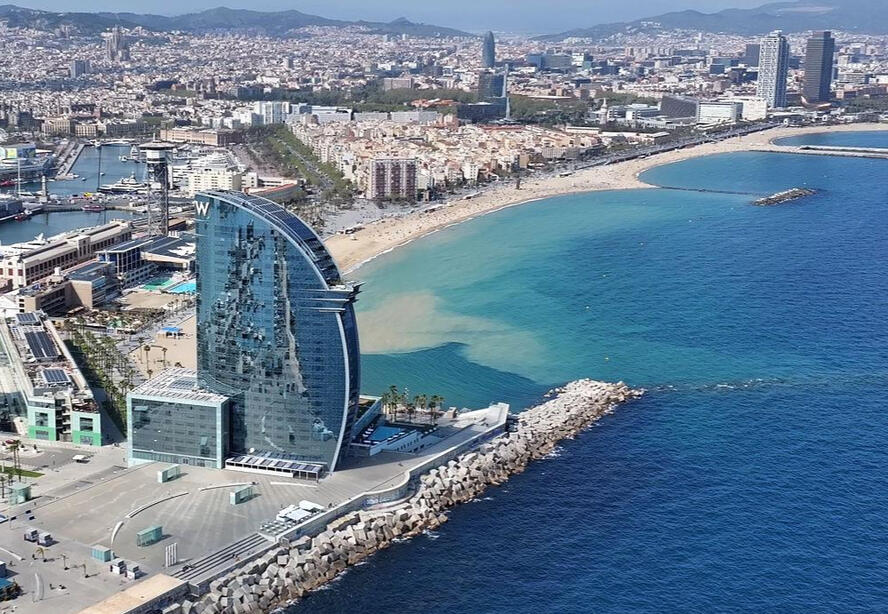
What would it look like to live, and invest, in Spain?That journey became personal.I now own property in Barcelona and am actively building a network across Spain to help U.S. buyers do the same, correctly, strategically, and confidently.
Rey Perez, REALTOR, iad Florida, CIPS

SERVICES
Strategic Guidance for Buying Property in Spain
1. Buyer Strategy Consultation
- Clarify goals (lifestyle vs investment)
- Budget alignment (true cost analysis)
- Location targeting
2. Spain Buyer Representation
- Guidance throughout your property search
- local market expertise
- trusted connections
- support through the buying process
3. Acquisition Support
- Property evaluation guidance
- Negotiation strategy
- Contract review coordination (with legal team)
4. Relocation Planning
- NIE guidance
- Banking setup overview
- Tax + residency considerations (intro level)
25-Minute Spain Strategy Session + Full Book AccessPersonalized roadmap
Key risks to avoid
Region-specific insights
Next steps customized to you

What does an American actually need to buy property in Spain?
Americans can buy property in Spain without becoming Spanish residents. I know the process from both sides: I am a U.S. real estate professional, and I have personally gone through the process of buying and owning property in Spain.
Here is the basic sequence I recommend American buyers understand:
1. Obtain your NIE. The Número de Identidad de Extranjero is your foreigner identification number in Spain. You will need it for the property purchase and many of the financial and administrative steps connected with owning a home in Spain.2. Get your finances organized. If your money is coming from the United States, be prepared to document where the funds originated. Spain takes anti-money-laundering documentation seriously.3. Open a Spanish bank account when appropriate. While the exact banking arrangements can vary, having a Spanish account can make the purchase and ongoing ownership much easier, including utilities, community fees and local taxes.4.Assemble your professional team. I recommend having an independent Spanish lawyer representing your interests, along with an experienced real estate professional who understands the market where you are buying.5. Identify the property and complete due diligence before closing. Ownership, liens and other registered charges can be checked through Spain's Property Registry. Your lawyer should also review the documentation affecting the property.6. Complete the purchase before a Spanish notary and register your ownership. The Spanish closing process is different from the American model, but once you understand who does what, it becomes much less intimidating.**
One of the advantages of working with me is that you do not have to build this team from scratch. I have developed relationships with reliable, trustworthy professionals in Spain who can assist with many of the services an American buyer may need, including legal representation, NIE assistance, banking coordination, tax guidance and other transaction-related requirements. My goal is to help create a coordinated, turnkey experience rather than leave you trying to navigate multiple unfamiliar systems on your own.My biggest advice is to start the administrative work early. Don't wait until you find your dream apartment to begin figuring out your NIE, banking and documentation.
What does buying property in Spain cost beyond the purchase price?
This is one of the first questions I had when buying in Spain, and Americans should budget for considerably more than the advertised property price.The biggest additional expense is usually tax. For a resale property, the buyer generally pays the applicable Property Transfer Tax, known as ITP. The rate and rules depend on the autonomous community where the property is located. A new home purchased from a developer is generally subject instead to VAT (IVA); the standard VAT rate for a new residential dwelling is currently 10%, with additional tax considerations that can apply.There are also notary, Property Registry and legal expenses, and there may be other costs depending upon the property, financing and transaction.I don't recommend using one national percentage and assuming that will be your closing cost. Spain's autonomous communities have their own tax rules, so a buyer in Barcelona may face a different calculation from someone buying in Madrid, Valencia or Andalucía.Americans also frequently ask me about Spanish Wealth Tax. Spain does have a Wealth Tax system, and non-residents can potentially be subject to it on Spanish assets. Whether you actually owe tax depends on your circumstances, applicable exemptions and other rules. Higher-net-worth buyers should get individualized advice from a Spanish tax professional rather than assuming that buying Spanish property automatically creates—or does not create—a Wealth Tax bill.I encourage buyers to obtain a transaction-specific cost estimate before committing to a purchase so they know their expected total cash requirement, not simply the sale price.
Do I need a Spanish lawyer, and what do they do that my agent does not?
I recommend that American buyers have an independent Spanish lawyer representing their interests.My role and the lawyer's role are different, and that's important.A real estate professional can help you understand markets, identify properties, communicate with agents and sellers, evaluate the practical advantages and disadvantages of a property, negotiate the transaction and coordinate the many moving pieces involved in getting from search to closing.The lawyer handles the legal side of the purchase. That can include verifying ownership and registered charges, reviewing contracts and property documentation, investigating legal issues affecting the property, coordinating tax and closing requirements and helping ensure that the transaction protects the buyer's legal interests.Spain's Property Registry provides important information about a property's registered ownership and charges through documents such as the nota simple, but understanding the complete legal picture can involve more than simply ordering that document.I don't see the lawyer as replacing the buyer's real estate professional—or vice versa. For an American purchasing in an unfamiliar legal system, I believe having both creates a much stronger team.
How is buying property in Spain different from buying property in the United States?
This was one of the biggest lessons for me personally. I work in residential real estate in the United States and have also gone through the buying process in Spain. They are not the same system with different paperwork.One major difference is property information and representation. Americans are accustomed to an MLS-centered marketplace where agents can search a broad inventory through one cooperative system. Spain's property market is much more fragmented. The property you want may be controlled by a particular listing agency, and finding the right home can mean working across multiple agencies and property portals.**Offers and deposits also need to be approached differently. **Americans should not assume that an offer, reservation payment or deposit functions like an earnest-money deposit under the contract they may know from their home state. The specific agreement matters enormously. Before transferring money or signing a reservation or deposit agreement, understand exactly what you are signing and under what circumstances the money can—or cannot—be recovered.Then there is the notary. In the United States, Americans may associate closing with a title company, attorney or escrow office depending on the state. In Spain, the notary has an official public-law role in the execution of the deed. The notary, however, is not your personal lawyer negotiating solely on your behalf. That's an important distinction.Due diligence feels different as well. Spain's Property Registry can establish registered ownership and reveal mortgages, liens and other registered conditions affecting a property. Buyers and their lawyers may also need to investigate community obligations, taxes, permits, occupancy or habitability documentation, building issues and other matters relevant to the particular property.This is where experience and local coordination become especially valuable. My role is not just to help locate a property, but to help an American buyer understand how the Spanish transaction fits together.The biggest mistake an American can make is assuming, "I've bought several houses in the U.S., so I know how this works." Your experience is valuable—but the Spanish system deserves to be learned on its own terms.
Can I buy property in Spain before I move there?
Yes. You do not have to become a Spanish resident before purchasing property in Spain, and it is entirely possible to begin—or even complete—much of the process while you are still living in the United States.Technology has made the search considerably easier. Buyers can review listings remotely, conduct video calls and walkthroughs and narrow their choices before traveling to Spain. For clients who are not physically present, having someone on the ground becomes particularly valuable because photographs and videos don't tell you everything.I want to know what the street feels like. What's directly across from the building? Is there traffic or nighttime noise? How does the common entrance look? What condition is the building in? How much natural light does the property really receive? How far is it actually from the supermarket, Metro, restaurants or other places important to the buyer's daily life?Those are questions a property portal cannot fully answer.A Spanish power of attorney can also be extremely useful. Depending upon the authority granted, it can allow a designated representative to handle specified parts of the transaction when the buyer cannot be physically present in Spain. Your Spanish lawyer should advise you on the appropriate form and scope of that authority.For buyers managing the process remotely, my goal is to make the experience as coordinated as possible. I can help connect you with trusted professionals who can assist with legal work, NIE requirements, banking, power of attorney, tax questions and other practical steps. Instead of trying to coordinate everything from thousands of miles away on your own, you can have a team in Spain working together around the transaction.My preference, whenever practical, is to combine technology with local human verification. We can accomplish an extraordinary amount from the United States, but buying a home is ultimately about more than the apartment itself. You're buying a building, a street, a neighborhood and, potentially, a completely different way of living.
Does buying property in Spain give an American the right to live in Spain?
No. Buying property in Spain and obtaining the legal right to reside in Spain are two separate processes.Americans are generally able to purchase Spanish real estate without first becoming Spanish residents. Owning the property, however, does not by itself give the owner an unrestricted right to live in Spain.If your plan is to spend extended periods in Spain or move there permanently, you need to consider the appropriate immigration or residency route separately from the real estate purchase. Depending on your circumstances, possibilities may include Spain's Non-Lucrative Visa, Digital Nomad Visa or another qualifying residence authorization.This distinction is particularly important for Americans who are buying a home as part of a future move. The property search, purchase, immigration planning, banking, tax planning and relocation process may overlap, but they are not legally the same thing.Because residency rules involve immigration law and each buyer's circumstances are different, I do not try to replace an immigration professional. Instead, I can help connect clients with reliable professionals who work with Americans relocating to Spain and can provide appropriate guidance regarding visas and residency.This is part of the turnkey approach I am building for American buyers. The objective is not simply to help you find a property and then leave you to figure everything else out. When appropriate, I can help coordinate access to professionals for real estate, legal services, NIE assistance, banking, taxation, immigration and other relocation needs so that the different pieces of your move to Spain work together.For many of my clients, the real question isn't simply, "Can I buy a house in Spain?" It is, "How do I successfully build a life in Spain?" Those are two very different questions and understanding that distinction early can make the entire process much easier.
Contact me here:
7362 Futures Dr #18 Orlando, FL 32819(407) 443-6666
[email protected]

Submit & Start Your Spain Plan
7362 Futures Dr #18 Orlando, FL 32819(407) 443-6666
[email protected]